
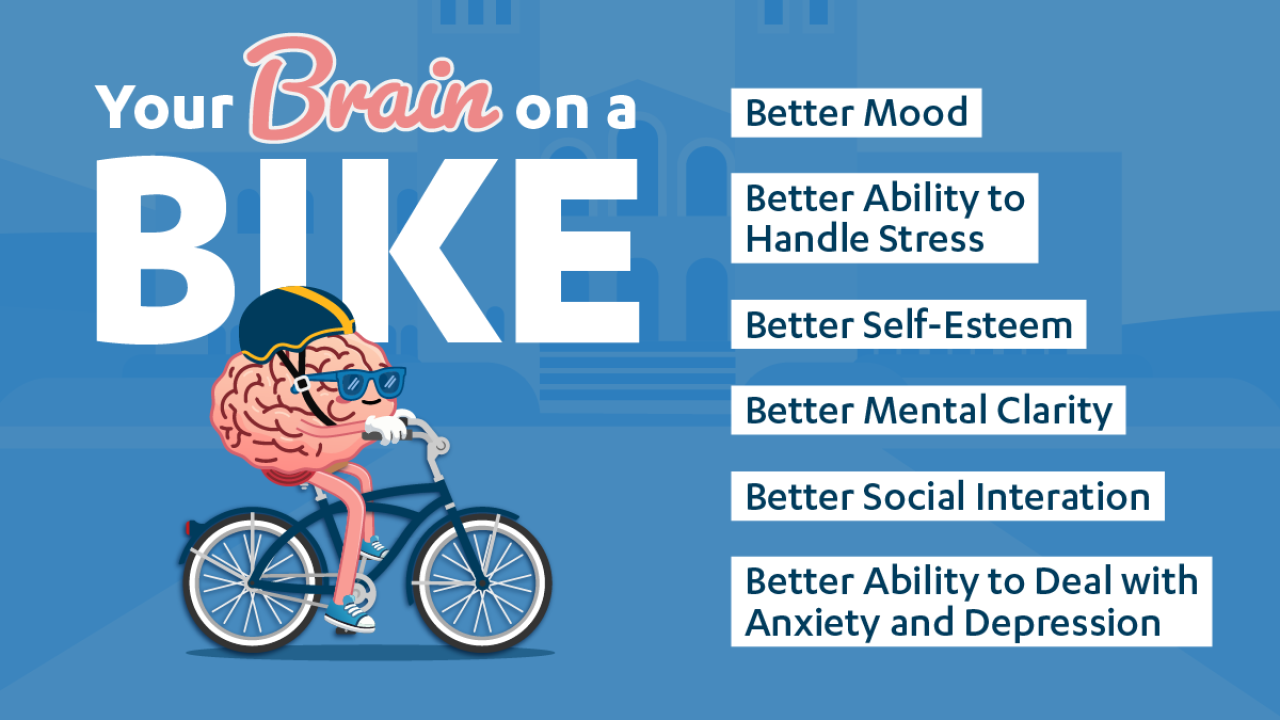
Backed by science, pedaling provides psychological perks. Research has shown that riding actually helps release a happiness cocktail of chemicals: endorphins, serotonin, dopamine, and anandamide. According to Harvard Health, these key neurochemicals function as feel-good messengers to the brain, providing a pathway to pleasurable emotions and feelings of bliss, boosting mood, relieving stress, and aiding in pain management.
Some steady biking can unlock these benefits. As little as 20–30 minutes, three times per week, and one can feel better. Here are 7 ways riding contributes to wellbeing.
- Improved Mood
As the League of American Bicyclists shares, those who bike can experience a euphoria similar to the documented runner’s high thanks to the release of mood-elevating endorphins during the exercise of riding. - Improved Mental Clarity
The League of American Bicyclists also notes that physical activity, such as biking, stimulates blood flow to the brain, increasing oxygen and nutrient delivery to support cognitive function. This mental clarity can help with creativity, problem-solving, and productivity. - Improved Self-Esteem
Biking can help build self-esteem by fostering a sense of accomplishment, a core of confidence. - Improved Ability to Handle Stress
Get stress relief by biking! Research has shown that regular exercise, like riding, lowers cortisol, the primary stress hormone in the body. Being outside also helps with stress. - Improved Ability to Deal With Anxiety and Depression
Regular riding is associated with lower psychological distress. Biking is like meditation in motion: lessening and easing symptoms of anxiety and depression. - Improved Social Interaction
Social interaction is a basic human need, critical for happiness. Biking provides an opportunity for connection with family, friends, and fellow Bruins, whether through group rides, club participation, or events. - Improved Pain Management
Harvard Health also suggests that exercise can play a helpful role in managing common pain conditions, recommending regular, gentle aerobic activities such as bicycling. The endorphins produced through moderate riding act as the body's natural painkiller. A low-impact cardiovascular activity that puts less overall stress on the body, biking can boost circulation, improve flexibility, and strengthen muscles, all of which can help with discomfort.
Ready to ride and recharge your mind? Hop on UCLA’s Bike Month celebration by participating in our weekly social media contests for a chance to win a $25 Amazon gift card and join us May 11 through 13 for on-campus events with bike gear giveaways. For another opportunity to win prizes, join UCLA on the Love to Ride platform and log your bike trips.