
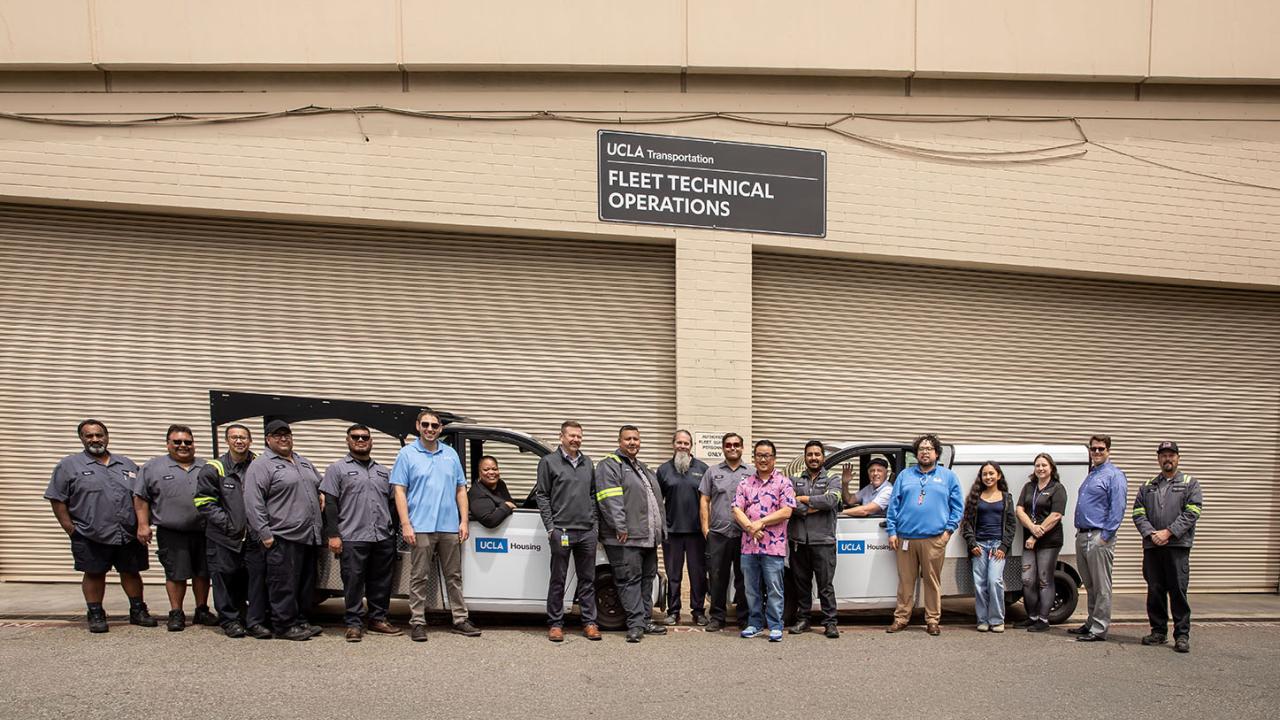
From trucks supporting maintenance and repairs around campus, the BruinBus carrying half a million passengers annually, police cars, fire response units, and ambulances providing emergency services, and vehicles rented to students, faculty, and staff, UCLA's fleet is in top working condition — coming in as the number one university on the NAFA Fleet Management Association 2026 100 Best Fleets ranking honoring peak-performing public and commercial fleet operations across North, Central, and South America.
UCLA earned the prestigious designation as the top university among NAFA’s 100 Best Fleets for 2026, in a competition that includes small and large municipalities, public education, government entities, corporations, businesses, utility companies, and other fleets across the Americas. To be named one of the best operations by the association, fleet services get evaluated on performance and progress, use of technology, energy management, financial management, service turnaround, staff development, and resource stewardship.
Running sustainably is a priority for the blue and gold fleet. UCLA boasts the largest battery-electric fleet among North American universities, actively phasing out gas-powered vehicles in favor of cleaner energy alternatives. UCLA Transportation is also working towards making every BruinBus battery-electric and zero-emission and building California’s first electric wireless road charging system for the campus, thanks to support from a state grant.

Consistently earning a spot on the national ranking each year since 2021, UCLA’s fleet was recognized with a win this year for technician productivity, improvements in repair turnaround, reduced administrative labor through advancements in technology, and operational performance.
This fleet keeps UCLA moving. University-owned vehicles transport critical patients to medical centers, enable academics to travel offsite to conduct research, and support students engaged in extracurricular activities outside the campus. A diverse range of 1,100 vehicles and rolling assets hit the road 365 days a year, supporting the university’s education, research, and public service, providing transportation that meets the needs of a diverse population of faculty, staff, students, patients, and visitors.